 Fri 23 Jan, 2026
 Non-Governmental Organizations, Education Development, Health Services, Women Empowerment, Child Welfare, Rural Development, Sustainable Development, Social Justice, Social Change, Development Programs
Why NGOs Are the Backbone of Modern Society
Non-Governmental Organizations (NGOs) are the backbone of modern social progress. In today's complex world, governments face huge challenges. Often, they lack the resources to solve every problem. Hence, these independent groups step in to fill the gaps. Without profit motives, they operate; their entire focus is on human welfare.
For example, there are people who live in extreme poverty. Consequently, they do not have clean water, schools, or doctors. Hence, Non-Governmental Organizations (NGOs) become a vital safety net. They give a voice to the voiceless. Whether they are small groups at the community level or large agencies at the global level, the mission remains the same. Their aim is to generate a world that would be just and equitable.
The article will delve deep into the impacts brought forth by these groups. We shall explore some of their structures, their key functions, and the challenges they face. We will gain insight into why they are indispensable in sustainable development.
Structure of Non-Governmental Organizations (NGOs)
For a group to work effectively, they need to have a solid ground on which to base their activities. A clear structure ensures that the groups maintain their bonds of trust. Further, the organization ensures that finances reach the proper individuals. If there is no organization, then resources could be squandered. It is for this reason that the majority of the reputable groups will have a strict hierarchy.
1. The Governing Board
At the very top, there is a Governing Board. This group consists of seasoned leaders. They do not take care of daily tasks. Instead, they look ahead to create the vision. In addition, they ensure that the group adheres to legal policies. They are the moral guide of the organization. Because of them, the group holds to its mission.
2. The Management Team
Next is the Management Team. Usually composed of an Executive Director, their role is to translate the Board's vision into reality. This is where plans are created. The staff is hired through this team. In essence, they are the engine of the organization.
3. Field Workers and Volunteers
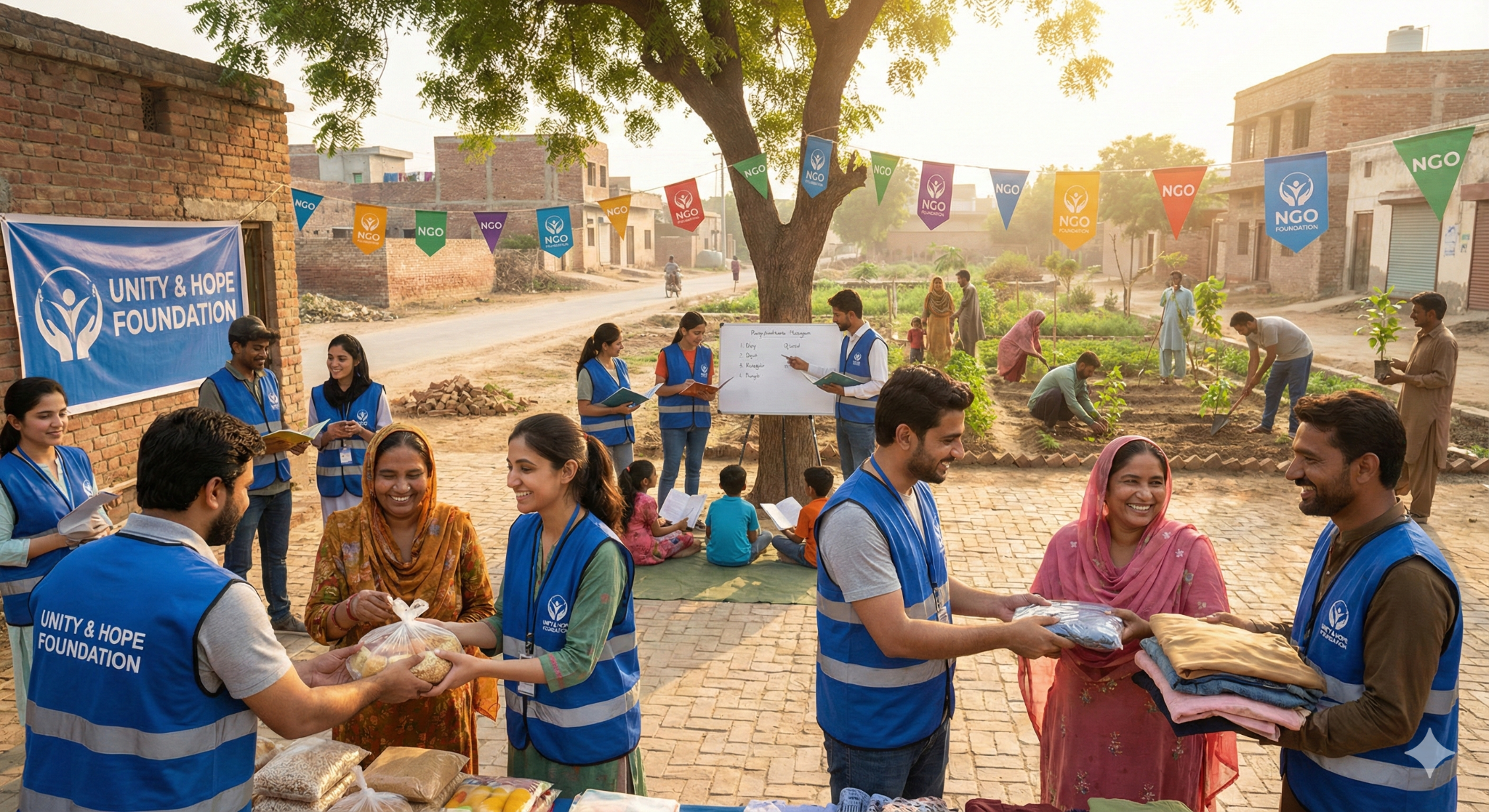
Perhaps the most important people are the field workers. They constitute the face of the charity. These individuals work directly with the community. For instance, they would be the ones who distribute food in a refugee camp or teach in a village school. Through their hard work, trust is built among the locals.
4. Finance and Administration
Behind the scenes, finance officers play a huge role. They manage the budget. Every dollar is tracked carefully. This is crucial because donors need to know where their money goes. Consequently, accurate reporting brings in more funding.
5. Communication and Fundraising
Finally, the communication team shares success stories. They use social media to raise awareness. Also, they write proposals to get new grants. Without them, the world would not know about the good work being done.
Functions of Non-Governmental Organizations (NGOs)
These groups wear many hats. They have varied and crucial functions. Non-Governmental Organizations (NGOs) work in different areas to better society. Below, we delve into just their principal roles.
1. Education and Literacy Support
Education is considered the key to escaping poverty. Unfortunately, most children are unable to attend a decent school. Hence, charities can really help a lot in this regard. Charities build more than classrooms; they focus on how young people learn.
- Formal and Non-Formal Education: Some groups run formal schools. On the other hand, some run non-formal centers for street children. This flexible approach is similar to the model used by the DODL, which brings education to those who cannot attend regular classes. Thus, even working children can get an education.
- Teacher Training: Also, they train teachers. One great teacher can alter a life. Hence, experts provide workshops on modern teaching methods. It improves the overall standard of education in the area.
- Girl Child Education: Also, they advocate for girls. In most cultures, girls are kept at home. These organizations speak to the parents. They describe to them the importance of educating daughters. Consequently, more girls attend schools today than ever before.
2. Healthcare and Medical Services
Health is wealth. Unfortunately, hospitals are scarce in remote areas. Thus, the aid groups bring healthcare to the doorstep. Their effort saves thousands of lives every year.
- Preventive Healthcare: Prevention is always better than a cure. Thus, groups focus on vaccines. They run campaigns to stop diseases like Polio and Malaria. Also, they teach people about hygiene. For instance, they show how washing hands can stop the spread of germs.
- Maternal and Child Health: Mothers and babies are vulnerable. As such, many programs focus on them. They provide them with vitamins for pregnant women. Groups ensure safe deliveries. Due to this, the infant mortality rate in many regions has decreased.
- Mental Health Support: Recently, more groups have been focusing on mental health. Trauma from war or poverty leaves deep scars. Thus, counselors provide psychological support. This helps people heal from the inside out. Organizations like the World Health Organization (WHO) often partner with them for these tasks.
3. Human Rights Advocacy
Everybody deserves respect. But sometimes laws aren't fair. That's why these groups act like watchdogs: they monitor how the governments treat the people.
- Legal Aid: Many poor people cannot afford lawyers. Thus, lawyers often provide free legal help through these groups. They fight for people who are wrongly arrested. Also, they help women fight domestic violence cases.
- Policy Change: In addition, they persuade leaders to modify bad laws. For instance, Amnesty International sheds light on human rights abuses. Due to this international spotlight, governments are compelled to take action. They make sure that the most impoverished voices are heard in the corridors of power.
4. Disaster Relief and Emergency Response
When nature strikes, chaos follows. During floods, earthquakes, or wars, governments can be overwhelmed. That's why Non-Governmental Organizations (NGOs) often are the first to arrive.
- Immediate Relief: Speed is of the essence. Teams provide water, food, and tents within hours. This immediate help keeps people alive. For example, when there is a flood, clean water is the most urgent need to stop cholera.
- Rehabilitation: Yet, their work does not end when the water recedes. They stay to rebuild. Workers help people build new homes, while farmers receive new seeds. Such long-term support enables communities to get back on their feet.
5. Economic Empowerment and Poverty Reduction
Charity is good, but independence is better. Hence, the theme of modern groups is "sustainable livelihoods." They want people to earn their own money.
- Microfinance and Loans: The most popular method is Microfinance. It means giving small loans to poor people. With this money, a woman can buy a sewing machine. Or, a farmer can buy a goat. Then, they earn income. And with that, the cycle of poverty will be broken.
- Vocational Training: They also impart skills, such as in computer coding, carpentry, or tailoring. In this way, the youngsters get employed, and unemployment and crimes in society decrease.
6. Environmental Conservation
Climate change is a global crisis. It affects the poor most. That is why environmental Non-Governmental Organizations (NGOs) today are so active.
- Sustainable Farming: They teach farmers new methods. For instance, they teach the use of less water. This is important in dry regions. Also, they encourage organic farming. This protects the soil for future generations.
- Conservation Projects: They even plant forests. Trees prevent soil erosion. They clean rivers and oceans, too. When they protect nature, they are protecting the people who depend on it.
The Impact of Non-Governmental Organizations (NGOs) on Social Development
Their presence simply cannot be ignored, for they transform society. The work they do extends beyond mere handouts.
- Empower Communities: First, they give power back to the people. They teach communities how to solve their own problems. Instead of waiting for help, people learn to lead. Lasting change becomes possible. It builds confidence.
- Bridging the Gap: Second, they reach the "unreachable." Most governments focus on cities. However, charities reach the deep rural areas. They go where there are no roads. Thus, they ensure that no one is left behind, regardless of where they live.
- Innovation and Research: Third, they are innovators. Teams try new ideas. If a new health kit works in one village, they share the idea. Then, the government can copy it. Therefore, they act as laboratories for social solutions.
- Global Connectivity: Finally, they connect local problems to global solutions. They work with the United Nations. They also work with the World Bank. This creates a global network of support. A village problem becomes a global concern.
Challenges for Non-Governmental Organizations (NGOs)
The road is rocky despite their good work. There are many hurdles that they face, which render their job difficult. Helping people is not that easy at all.
1. Financial Instability
The biggest challenge is money. Donations are their lifeline. Sometimes the economy is bad. Then, donors stop giving money. As a result, important projects have to stop. Of course, it means uncertainty for the people they are serving.
2. Government Regulations
Some governments are strict. At times, the set laws may be hard. The officials may request too much paperwork. This bureaucracy postpones urgent help. In other countries, these groups may be viewed as threats by the governments of those nations. Hence, they attempt to curb their activities.
3. Safety Risks
The field workers usually operate in hazardous areas. For instance, working in war zones exposes them to the risk of death. Unfortunately, many volunteers get injured or kidnapped in the line of duty to save people. Safety for the staff is always a concern.
4. Lack of Skilled Staff
The charities often cannot offer very high salaries, so skilled professionals prefer corporate jobs. This is the reason for the shortage of experts in this development sector. High staff turnover is one problem.
5. Community Mistrust
Locals, at times, do not trust outsiders. They may perceive that the group has a hidden agenda. Residents might fear cultural changes. Hence, this is why it takes years to build trust. It takes time and respect towards locals' customs.
The Future of Social Development
What does the future hold? The function of Non-Governmental Organizations (NGOs) is evolving. They are becoming smarter.
- Technology Integration: First, they use technology. Applications monitor health-related information. Drones deliver medicines. All this makes their activity more rapid and less costly.
- Partnerships: This is where they are being more collaborative. Instead of competing, they are collaborating. Also, they are partnering with private companies. This brings in more resources.
- Focus on Sustainability: Finally, the focus is shifting. The focus is no longer on "giving fish." It is about "teaching to fish." The goal is to make communities self-reliant.
Conclusion
All in all, Non-Governmental Organizations (NGOs) are essential for a healthy world. These groups act as a bridge between the rich and the poor. Sick people receive medicine. In addition, students get books. Justice is brought to the oppressed.
Although they face money issues, amidst all the setbacks and safety issues, their spirit remains strong. They are the conscience of humanity. If society is to grow, we need to support these groups. Everyone can, either by donating or volunteering. Their success is our success. Without them, the world would be such a tough place for the vulnerable.